
The Best Paint Colors for a Home Office in DFW: Focus, Energy, and How North Texas Light Changes Everything

Nikolle Bauder • March 9, 2026

The home office has become one of the most consequential rooms in a Dallas-Fort Worth home, and for a growing number of Plano, Frisco, Richardson, Allen, and McKinney residents, it's also one of the most permanent. What began as a temporary arrangement for many families has settled into a long-term reality — a dedicated room where productivity, focus, and mental clarity need to show up reliably every workday. Most homeowners who set up a home office invest considerable thought in the desk, the monitor setup, the chair, and the lighting fixture.


Very few invest the same deliberate attention in the paint color on the walls surrounding all of that equipment, even though color is one of the most potent and least expensive environmental variables affecting cognitive performance and mood in any workspace. In a region where North Texas sunlight pours through windows with an intensity and angle unlike almost anywhere else in the country, getting that color decision right requires understanding both the neuroscience of color and the specific optical behavior of DFW's light — because a color that promotes focus beautifully in a Seattle office can produce fatigue, glare, or an atmosphere of restless anxiety in a south-facing Plano study.


Why Color Affects Cognitive Performance — and Why It's Not Just Preference


Color preference and color performance are two entirely different things, and confusing them is the most common mistake homeowners make when choosing a home office paint color. You might personally prefer warm, rich tones — deep burgundies, saturated golds, warm chocolates — and those colors may make you feel comfortable and at ease in a living room or bedroom. But comfort and cognitive performance are not the same neurological state, and paint colors that promote relaxation actively work against the alertness, sustained attention, and working memory performance that a productive workday demands.


The research on color and cognition has become substantially more refined over the past two decades. Studies in environmental psychology have established that mid-value blues and blue-greens consistently support sustained attention tasks — the kind of deep focused work that characterizes knowledge work, writing, analysis, and design. Soft, desaturated greens support accuracy and careful, methodical work, partly because green sits at the center of the human visual spectrum and requires the least muscular adjustment from the eye to bring into focus, reducing the subtle visual fatigue that accumulates over a full workday.


Warmer tones in the yellow-orange family stimulate creative and generative thinking — brainstorming, ideation, lateral problem-solving — but at higher saturation they also elevate cortisol and increase the likelihood of distraction and restlessness. Highly saturated versions of any color, including bold reds, vivid yellows, and intense greens, produce stimulation levels that are counterproductive for sustained focus regardless of the specific hue.


What this means practically for a DFW homeowner designing a home office is that the most productive color palette is almost never the most visually dramatic one. The colors that perform best cognitively tend to be mid-value, slightly desaturated versions of blue, blue-green, soft green, or warm neutral — colors that feel deliberate and refined rather than bold and expressive.


How Light Rewrites the Rules


Understanding color science is the necessary foundation for a home office color decision in the Dallas-Fort Worth area, but applying that science without accounting for DFW's specific light conditions will still lead you astray. North Texas sits at a latitude and in an atmospheric environment that produces natural light with characteristics meaningfully different from the coastal, northern, or Pacific environments where much of the color guidance homeowners encounter online was developed.

DFW receives an average of 234 sunny days per year, with a sun angle and intensity that produces light with a strong warm-yellow to neutral color temperature for most of the day. This is significantly different from the cool, blue-shifted diffuse light characteristic of the Pacific Northwest or the Northeast, where the same paint colors are photographed for the shelter magazines and websites that most homeowners use for color inspiration.


A soft blue that looks sophisticated and calming in a Portland home office — where cool, diffuse light maintains the color's cool undertone throughout the day — can look distinctly purple-gray or lavender in a DFW home office where the warm North Texas sunlight shifts the color's perceived undertone toward its violet component. A warm greige that looks grounded and neutral in a north-facing New England room can read orange or pink in a south-facing Frisco office where intense afternoon sun amplifies every warm undertone in the paint.

The practical implication is that color decisions for a DFW home office must be made by testing samples on the actual walls of the actual room, observed at multiple times of day under both natural and artificial light, before committing to full coverage. A two-inch sample card evaluated under fluorescent store lighting will not tell you what that color does in your specific office at 3 p.m. on a summer afternoon when the west-facing window is pouring in full Texas sun.


South- and West-Facing Offices: Managing Intensity Without Losing Atmosphere


In the DFW metroplex, south-facing and west-facing home offices receive the most intense and warmest natural light, and this exposure profile has specific implications for color selection. Warm undertones in paint colors are amplified by warm light — meaning a paint that reads as a balanced warm gray under morning light will shift noticeably toward tan, beige, or even orange by mid-afternoon as the sun's angle intensifies. Colors with strong blue or green undertones fare better on these exposures because the warm light partially neutralizes the cool undertone, producing a balanced, grounded appearance rather than the slightly clinical effect those same colors can develop in less light-intense environments.


For south- and west-facing offices, consider blue-greens and soft teal-adjacent tones in a mid-to-light value range. Colors in the Benjamin Moore family like Buxton Blue, Sea Salt, or Quiet Moments, or their Sherwin-Williams equivalents in the Reflecting Pool and Quietude family, maintain their integrity through DFW's afternoon light far better than pure cool blues that can shift uncomfortably toward purple. Warm whites with distinctly neutral undertones — avoiding anything with a pronounced yellow or pink cast — work well as accent walls or as the color on a single wall behind a monitor, where their light-reflective properties reduce eye strain without contributing the color fatigue that saturated walls can produce.


North-Facing Offices: Where You Can Be Bolder


North-facing home offices in the DFW area receive indirect, relatively consistent light throughout the day — cooler in quality than south or west exposures, and lower in intensity than any other orientation. This is actually the most forgiving exposure for home office color selection because the cooler, more diffuse light doesn't amplify warm undertones the way direct sun does, giving you more latitude to use warmer tones that would look overpowering in a south-facing room.


A north-facing office in a Plano or McKinney home is one of the few situations where a warm sage green, a soft terracotta-adjacent neutral, or even a rich putty tone can perform beautifully — delivering the warmth and psychological comfort that makes a room feel pleasant to spend a full workday in without the intensity problem those colors create under direct Texas sun. The one pitfall to navigate on north-facing exposures is that truly cool colors — pure blues, cool grays, and blue-greens at low value — can feel cold and slightly dreary in a room that receives no direct sunlight, particularly during DFW's winter months when the sun angle is lower and indirect light is even more subdued. Adding warmth through the paint color compensates for what the light doesn't naturally provide.


The Ceiling and Trim Decisions That Complete the Productivity Environment


Home office color selection often stops at the four walls, but the ceiling and trim colors in a workspace contribute meaningfully to the cognitive environment and deserve deliberate choices rather than defaults. Standard flat white ceilings are appropriate in most home offices, but the specific white matters more than homeowners typically realize. A ceiling white with a pronounced cool undertone in a warm-toned office can feel discordant — the visual contrast between a warm wall and a blue-white ceiling creates a tension that registers as subtle discomfort even when you can't identify its source. Matching the ceiling white's undertone to the dominant undertone of the wall color — warm-white ceiling with warm walls, neutral-white ceiling with cool or neutral walls — produces a cohesive environment where every surface works in the same tonal direction.


Trim color in a home office has a functional dimension beyond aesthetics. Bright, pure white trim against a mid-value wall color creates high contrast that makes the room's architectural edges visually sharp and stimulating. In a bedroom or living room, this contrast reads as clean and classic. In a workspace where you'll spend hours each day, that edge contrast contributes to visual fatigue in ways that are subtle but cumulative. A trim color that's a step or two warmer or softer than bright white — a linen, an antique white, or a warm off-white — reduces that edge contrast while maintaining the visual differentiation between wall and trim that gives a room its sense of finish and detail.


The One-Color-Plus-Accent Framework for DFW Home Offices


The most consistently successful approach for home office color in the DFW area is a framework that treats the room's dominant wall color as a single, carefully chosen mid-value tone and uses one accent wall — typically the wall behind the primary seating position or the wall opposite the main desk — as an opportunity for slightly more visual interest or depth. This accent can be a slightly deeper value of the dominant color, a complementary tone that shares the same undertone family, or a textured treatment like board and batten or shiplap painted in a contrasting but coordinated shade.


What this framework avoids is the all-four-walls-in-the-same-saturated-color mistake that produces an immersive color experience appropriate for a restaurant or retail environment but overwhelming for eight-hour work sessions. Color at full saturation on all four walls of a home office creates a phenomenon called color fatigue — the visual system adapts to the dominant hue, and after extended exposure, attention and focus performance measurably decline. Reducing saturation, limiting the deepest color to a single wall, and using the remaining three walls in a lighter value of the same hue or a complementary neutral gives the visual system relief while maintaining the character and atmosphere that makes a dedicated office feel like a considered, intentional space.


Let Hutch'N'Son Help You Create a Workspace That Works as Hard as You Do


The right color in a home office isn't just aesthetically pleasing — it actively supports the focus, energy, and sustained attention that productive work demands. If you're ready to transform your home office in Plano, Frisco, Richardson, Allen, McKinney, or anywhere across the greater Dallas-Fort Worth area with colors and products selected specifically for North Texas light and your room's unique exposure, Hutch'N'Son Painting is ready to help. Our team brings over 40 years of experience working with DFW's demanding light conditions, and we'll walk you through color testing, sheen selection, and product choices that deliver a workspace that performs beautifully from the first morning light to the last evening hour. Contact us today to schedule your free estimate.
By Nikolle Bauder April 27, 2026
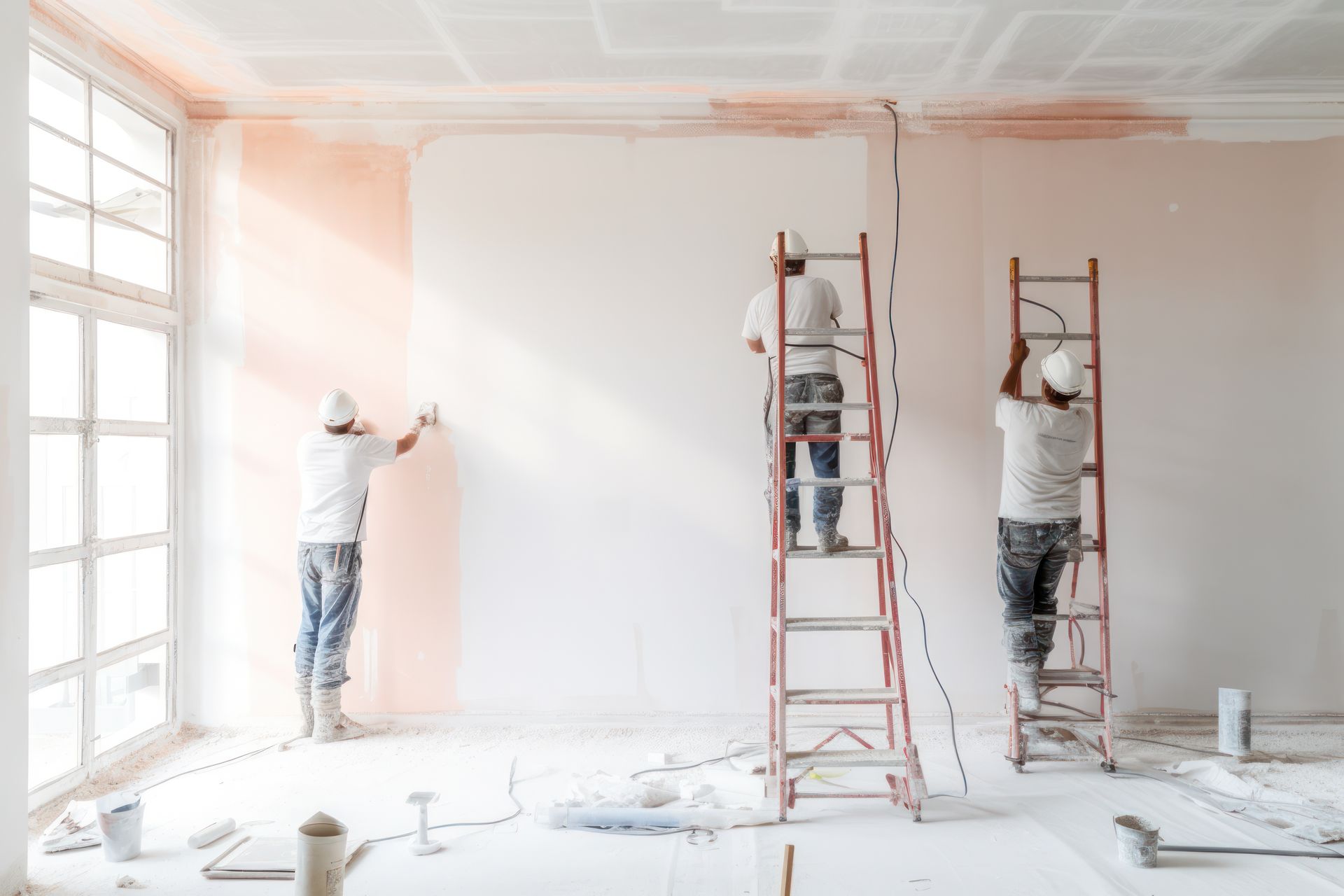
Most homeowners spend the majority of their pre-project research time on finish paint — the color, the sheen, the brand, the specific formulation. The primer decision gets far less attention, often defaulting to whatever is on sale at the paint store or whatever the previous painter left behind in the garage. This priority inversion is one of the most consistent sources of preventable paint failure in residential painting, because primer is the decision that determines whether the finish coat can do what it was designed to do or whether it is being asked to perform over a foundation that cannot support it. Primer is not simply an undercoat that makes paint stick. Different primer formulations perform fundamentally different functions — sealing porous substrates, promoting adhesion on difficult surfaces, blocking stains from migrating through finish coats, and building a uniform foundation that allows topcoat color to read accurately and consistently. The primer that performs these functions correctly on one surface type performs them inadequately or not at all on a different surface type, which is why primer selection is a surface-by-surface decision rather than a product-level decision made once for an entire project. In Plano, Frisco, Richardson, Allen, McKinney, and across the greater Dallas-Fort Worth area, where North Texas's extreme UV, high summer temperatures, and the humidity cycling between the dry heating season and the humid spring and summer create stress profiles that expose every weakness in a paint system quickly, getting the primer decision right is more consequential than in moderate climates where the environment is more forgiving of marginal preparation choices. Here is what belongs on each major surface type and why. Drywall: New and Previously Painted Surfaces New drywall — the unpainted gypsum board that contractors install during construction or renovation — is one of the most porous and moisture-sensitive substrates in residential painting, and it requires specific primer treatment before finish paint for reasons that go beyond simple adhesion. The paper facing on drywall absorbs the first coat of paint applied to it at a dramatically higher rate than any subsequent coat, producing a condition called flashing — visible sheen inconsistency across the painted surface — where areas of bare paper absorbed more binder from the paint than areas with adjacent primer, leaving a dried film that reads as slightly flatter and duller at every location where paper absorption was highest. PVA primer — polyvinyl acetate, sometimes called drywall primer or new construction primer — is the correct product for new drywall because its formulation is specifically engineered to seal the paper facing and equalize the absorption rate across the entire surface before finish paint is applied. PVA primer penetrates into the paper facing, fills the microscopic pores, and creates a uniform foundation that finish paint reads from consistently — producing the even sheen, complete coverage, and color accuracy that two coats of finish paint over raw drywall often fail to achieve even with additional coats. In a DFW home where a renovation or new construction project needs to be completed efficiently, PVA primer over new drywall is the step that makes two finish coats look as good as three or four would without it. Previously painted drywall in good condition — no peeling, no staining, no significant sheen inconsistency — does not require a full prime coat before repainting if the new color is in a similar value range as the existing color and the surface has been properly cleaned. A light scuff sanding with 220-grit paper to create mechanical tooth, followed by spot priming at any repaired areas, is adequate preparation for a standard repaint on sound previously painted drywall. Where a full prime coat is warranted on previously painted drywall is when the color change is dramatic — particularly a dark-to-light transition — or when the existing paint has a high-gloss finish that needs to be chemically or mechanically dulled to provide adequate adhesion for the new system. Repaired Drywall: The Surface Where Primer Is Most Non-Negotiable Repaired drywall areas — patches made with joint compound at nail holes, larger dings and dents, corner repairs, and any area where the drywall paper has been damaged and replaced with joint compound — represent the most common primer failure point in residential interior painting, and the failure is visible every time it happens: flat, dull patches at every repair location surrounded by a properly finished wall, announcing themselves as repairs to anyone who looks at the wall under raking light. The cause of this flashing at repairs is differential absorption. Joint compound is significantly more porous than the drywall paper surrounding it, and it absorbs the binder from any paint applied directly over it far more aggressively than the paper does. Paint over unprimed joint compound produces a film that is binder-poor at the compound surface — because the compound drank the binder down into its porous structure before the film could cure — and that binder-poor film reads as flat and dull compared to the binder-rich film on the adjacent properly sealed surface. The primer that addresses this problem on repaired drywall is PVA or a dedicated sealer applied specifically over every repair location before any finish coat touches the wall. The primer penetrates the joint compound and seals it against the differential absorption that causes flashing. This spot priming step is not optional on a repainted interior wall with any repairs — it is the step that determines whether the repairs disappear into the wall or announce themselves permanently. In a DFW home where the Blackland Prairie clay soil's seasonal movement produces hairline cracking at corners and around window and door openings in most homes over time, this spot priming step is a regular requirement on virtually every interior repaint. Wood Trim: Where Adhesion and Blocking Both Matter Interior wood trim — baseboards, door casings, window casings, crown molding, and any other painted millwork — presents primer requirements that differ from drywall in two important ways. First, wood is a more chemically active substrate than drywall, with resins, tannins, and extractives that can bleed through water-based primers and topcoats and produce discoloration that appears days or weeks after painting. Second, wood trim in a DFW home experiences more dimensional movement through the extreme dry-to-humid cycling of North Texas seasons than trim in moderate climates, requiring a primer with adequate film flexibility to accommodate that movement without cracking at the primer-to-wood interface. For bare wood trim — new millwork being painted for the first time, or trim that has been stripped to bare wood for refinishing — a shellac-based primer or a high-quality oil-based wood primer applied before the finish coat addresses both the tannin bleed and the adhesion requirements simultaneously. Shellac is the more aggressive stain and bleed blocker of the two and is the appropriate choice for wood species with high tannin content — particularly for any hardwood trim like oak or walnut that is being painted rather than stained, where the tannins in the wood are aggressive enough to bleed through multiple coats of latex primer and finish without adequate blocking. On pine trim — the most common material in DFW residential construction — a quality oil-modified or shellac primer applied at end grain and any visible knots provides adequate blocking, with a latex bonding primer over the face surfaces sufficient for general adhesion. For previously painted trim in good condition — firmly adhered across the entire surface, no peeling, no lifting at edges — a light scuff sanding and spot priming at any areas where the existing finish has been compromised is adequate preparation for a trim repaint. The specific condition that requires a full prime coat on previously painted trim is a sheen change — repainting a high-gloss trim in a lower sheen, or repainting over a trim system where multiple coats have built up to a film thickness that has begun showing adhesion fatigue at high-stress locations. Stained Ceilings: The Surface Where Product Chemistry Is the Entire Answer Water-stained ceilings are the interior surface where primer selection is most consequential and where the wrong choice produces the most reliably frustrating outcome — the stain that reappears through fresh paint within weeks, sometimes looking darker than it did before the paint was applied. In DFW, where sudden intense rainstorms can overwhelm roof drainage systems and produce water intrusion events, and where HVAC systems running through long cooling seasons can develop condensation issues that stain ceiling surfaces near supply registers, water-stained ceilings are a frequent pre-painting condition that requires specific treatment. Standard latex primers — including the latex primers labeled as "stain blocking" at the consumer level — do not reliably block the water-soluble organic and mineral compounds that produce ceiling staining from migrating through a fresh paint film. The mechanism is straightforward: water-based primers introduce water to the stained surface during application, that water dissolves the water-soluble staining compounds, and as the primer dries, those dissolved compounds migrate upward through the wet film and deposit at the surface. Fresh finish paint applied over that primer inherits the same compounds, and the stain reappears. Shellac-based primer is the correct product for water-stained ceilings because it cures through solvent evaporation rather than water evaporation, introducing no water to the stained surface and therefore not mobilizing the water-soluble staining compounds. The dried shellac film is chemically impermeable to those compounds, creating a true seal that two coats of quality flat ceiling paint can be applied over without bleed-through. One coat of shellac primer applied over a properly dried stain location — after confirming that the moisture source has been resolved — produces a permanently blocked stain that does not return. Oil-based stain-blocking primers are the appropriate alternative to shellac on stained ceilings when shellac's faster dry time and stronger odor are not preferable for the project conditions. Both products share the non-water-based curing mechanism that makes them effective where latex stain blockers fail. Smoke staining on ceilings — from fireplace backdraft events, candle combustion, or cooking residue accumulation — requires the same shellac or oil-based blocking approach as water staining. The organic compounds in smoke residue are similarly water-soluble and migrate through latex-based primers in the same way, producing the yellowing and ghosting that appears through fresh ceiling paint over inadequately blocked smoke-stained surfaces. Previously Painted or Glossy Surfaces: The Adhesion Primer That Gets Overlooked There is one primer category that receives less attention in general painting guidance than it deserves for how frequently the need for it arises on typical DFW repaint projects: bonding primer for previously painted or glossy surfaces where adhesion is a genuine concern rather than a formality. Standard latex primers rely on mechanical tooth — the microscopic roughness of the substrate surface — to anchor the primer film during application and curing. On drywall and bare wood, adequate mechanical tooth is present without additional preparation. On previously painted surfaces that have been cleaned but not scuff-sanded, on factory-finished cabinetry or millwork with conversion varnish finishes, or on any surface where the existing finish is hard, smooth, and chemically resistant, standard latex primer may not develop adequate adhesion to hold through the thermal cycling and daily contact that DFW interiors impose on painted surfaces. Bonding primer — formulated with adhesion promoters that create a chemical bond with smooth, previously finished surfaces in addition to whatever mechanical tooth is available — is the correct product in these situations. On cabinet painting projects, where the existing factory finish is often harder and more chemically resistant than standard paint, bonding primer is not an optional upgrade — it is what determines whether the cabinet finish holds through the daily contact and chemical cleaning exposure of a DFW kitchen or begins chipping at hardware locations within the first year.  Let Hutch'N'Son Apply the Right Primer to Every Surface in Your Home Primer selection is the foundation of every paint project Hutch'N'Son executes in Plano, Frisco, Richardson, Allen, McKinney, and across the Dallas-Fort Worth area — because forty years of working in North Texas homes has given us a specific and detailed knowledge of what happens when the wrong primer goes on the wrong surface and what a properly primed foundation looks like when the finish coat goes on over it. We don't apply a single primer to every surface on a project and call the preparation done. We evaluate each surface type, identify the specific preparation requirement it presents, and apply the product that addresses that requirement — because the finish paint you invest in deserves a foundation that allows it to perform to its full potential. Contact our team today for your free estimate — and let's make sure every surface in your home gets the preparation it actually needs.
By Nikolle Bauder April 20, 2026
There is a pattern that repeats itself across Plano, Frisco, Richardson, Allen, McKinney, and every other established neighborhood in the Dallas-Fort Worth metroplex with enough regularity that experienced exterior painters can almost predict it from a street-level assessment. A home gets painted — often by the lowest bidder on a competitive job — and the result looks excellent for the first season. The color is right, the coverage looks complete, and the homeowner feels good about the decision. By the second spring, peeling begins at the window frames. By the third year, bubbling has appeared on the south-facing walls, the caulk at the door casings is cracking, and sections of siding that were never a problem before the paint job are showing moisture staining that wasn't there two years ago. The paint didn't fail. The preparation failed. And the paint is simply making that failure visible. This outcome is so common in the DFW market because North Texas delivers one of the most demanding exterior environments for paint coatings in the country, and that demanding environment has zero tolerance for preparation shortcuts that milder climates sometimes absorb without immediate consequence. Surface temperatures exceeding 150 degrees on south and west-facing walls in summer, freeze-thaw cycling through a North Texas winter that is less severe than Wisconsin's but still consequential for any moisture that has infiltrated a compromised joint, spring hail that impacts paint films at velocities most manufacturers don't test against, and the expansive clay soils that shift foundations and stress every caulk joint in a structure — every one of these forces exploits any weak point in the preparation system with a speed and thoroughness that makes the cost of skipped prep immediately quantifiable in years of paint life lost. Understanding what exterior preparation actually involves, how long each phase takes when done correctly, and what the specific preparation failures look like in the DFW environment is what allows homeowners to evaluate competing proposals intelligently rather than defaulting to price as the primary differentiator. What Exterior Preparation Actually Consists Of The term "prep work" covers a range of activities that vary enormously in scope and thoroughness between contractors, and the difference between a thorough preparation and a minimal one isn't always visible until the paint has been on the wall for two seasons. Breaking down what complete exterior preparation actually involves — and how long each component takes on a typical DFW home — makes the time investment make sense in concrete terms. Pressure washing is the most visible preparation step and the one most homeowners are aware of, but it is the beginning of the preparation process rather than the whole of it. Proper pressure washing of a typical 2,000 to 2,500 square foot DFW home takes two to four hours of actual washing time, followed by a drying period that in North Texas conditions during spring and fall should be at minimum 24 hours and ideally 48 hours before any coating is applied. Rushing the dry period — beginning prep work the morning after afternoon washing because the surface looks dry — is one of the most common preparation shortcuts in the market, and it is one that doesn't become visible until months later when moisture trapped between the wet substrate and the new coating migrates outward and lifts the paint film from below. After washing and adequate drying, the scraping phase addresses all loose, failing, and compromised paint on the existing surface. On a DFW home that has been previously painted and is being repainted rather than receiving a first application, this phase is where the real time investment separates thorough preparation from cursory preparation. A contractor committed to scraping every area of loose paint back to a solid, adherent edge — not just the sections that are obviously peeling, but every section that fails the adhesion test of a putty knife drawn firmly across the surface — will spend significantly longer on scraping than a contractor who addresses only the visibly deteriorated areas and calls the surface ready. This distinction is invisible from a proposal document that simply says "scrape and prepare." It is very visible two years later when the sections that weren't adequately scraped begin lifting. The Caulk Phase: The Preparation Step With the Highest Consequence-to-Time Ratio Caulking is the preparation phase that has the greatest single impact on how long an exterior paint job performs in North Texas conditions, and it is also the phase most frequently executed inadequately — not because it is technically difficult, but because doing it correctly is time-consuming and the shortcuts are invisible at inspection. Complete caulking preparation on a DFW home involves removing all existing caulk from every joint on the exterior — every window and door perimeter, every penetration through the siding, every transition between dissimilar materials — before any new caulk is applied. This removal-first protocol is what distinguishes professional exterior preparation from superficial preparation, and it is the step most frequently skipped. Applying new caulk over existing caulk that has hardened, cracked, or partially separated from the substrate creates a layered system where the new bead can only adhere as well as the old bead beneath it adheres to the substrate — which is, by definition, inadequately. The new caulk looks complete at inspection and fails within one to two DFW winter and summer cycles because it is bonded to a failing layer rather than to the actual substrate. Removing all existing caulk from a 2,000 to 2,500 square foot home with standard window and door counts takes three to five hours of dedicated work. Cleaning the joint faces after removal, allowing them to dry, and applying new siliconized acrylic caulk with proper tooling and a cure period before painting adds another four to six hours across the caulking phase. For a complete exterior preparation project, the caulk phase alone represents a full day of work — time that a contractor proposing a two-day exterior job on a standard DFW home almost certainly hasn't allocated for if the total project timeline has to accommodate that scope. Priming: The Phase That Most Exterior Proposals Treat as Optional Primer specification on an exterior painting project is where the difference between a professional preparation standard and a budget approach becomes most consequential for long-term performance, and it is the phase where the most technically significant shortcuts are taken. Not every surface on a DFW exterior requires a full prime coat before topcoat application. Sound, previously painted surfaces being coated with a compatible product at reasonable color similarity can accept topcoat directly over properly prepared existing paint. But specific conditions require primer, and identifying and addressing those conditions in the preparation phase rather than painting over them is what prevents the failures that appear within the first two years on a new paint job. Bare wood exposed by thorough scraping requires spot priming before topcoat to seal the porous substrate against moisture infiltration and to provide the film build that topcoat alone cannot deliver over raw wood in a single application. Patched areas where joint compound or filler has been used to address surface damage require priming before topcoat because joint compound absorbs paint at a different rate than the surrounding surface, and unprimed patches produce the flat, dull spots — called flashing — that appear as visible patches under raking light even when the topcoat color is uniformly correct. Water stained areas on siding or trim require stain-blocking primer before topcoat, because standard topcoat over an unblocked water stain produces a result that looks clean on application and reveals the stain through the fresh paint within weeks as the water-soluble compounds migrate upward through the wet film. In North Texas, where hail damage creates small but numerous impact marks on painted siding surfaces, and where foundation movement creates hairline cracks at corners and around openings on almost every home in the Blackland Prairie clay zone, the priming phase on a DFW home requires more surface-specific attention than a standard exterior project elsewhere demands. Mapping every hail impact, every crack, and every repaired area and ensuring each receives the correct primer treatment adds time to the preparation phase — time that the homeowner who compares a thorough proposal to a budget proposal will see as a cost difference rather than understanding it as a performance difference that shows up in years three and four rather than on day one. The Dry Time Discipline That North Texas Makes Particularly Consequential Across every phase of exterior preparation, the dry time discipline — the commitment to allowing each material adequate time to cure before the next phase begins — is the variable that separates a preparation sequence that performs as designed from one that fails at the timing weak points despite using the right materials. This dry time discipline is particularly consequential in DFW because North Texas weather creates conditions that both compress and extend dry times in ways that require active management rather than passive adherence to product-label specifications. A product label dry time is calibrated for moderate temperature and humidity conditions. In the DFW area during spring painting season — the peak exterior painting window — temperatures can swing from cool, damp mornings to hot, dry afternoons within a single day, and the dry time behavior of caulk, primer, and topcoat changes meaningfully across that swing. Caulk applied at 50 degrees in the morning may not reach adequate cure for painting by 2 pm even if the label suggests a four-hour window, while caulk applied at 80 degrees on a dry afternoon in the same week may be ready in two hours. Professional exterior painters in the DFW market who have spent years managing this variability develop judgment about when materials are actually ready for the next phase rather than when the clock says they should be, and that judgment translates into preparation sequences that hold up versus ones that look complete but have embedded timing failures that surface over the following seasons. What a Proper Exterior Prep Timeline Looks Like on a DFW Home For a typical 2,000 to 2,500 square foot single-story home in Plano, Frisco, Richardson, Allen, or McKinney, the preparation phase of a professionally executed exterior painting project takes two to three full working days before a topcoat is applied to any surface. This timeline accounts for pressure washing and dry time, complete scraping, caulk removal and replacement with adequate cure time, spot priming and stain blocking at every location that requires it, and a final surface inspection before the first topcoat is committed. A proposal for the same home that anticipates total project completion in two days — which is the timeline many budget exterior proposals in the DFW market are built around — mathematically cannot have allocated the preparation time that the work described above requires. The time has to come from somewhere, and it comes from the preparation phases that don't show up in finished photographs and aren't visible at project completion. They show up at year two and year three, when the homeowner is back to square one on a paint investment that should have lasted eight. Hutch'N'Son Doesn't Cut Corners on Prep 35+ years of painting homes throughout Plano, Frisco, Richardson, Allen, McKinney, and the greater Dallas-Fort Worth area has given the Hutch'N'Son team a specific and detailed knowledge of what exterior preparation shortcuts look like at year two and year three — because we're often the crew called to repaint the homes where they happened. Our exterior project timelines are built around what the preparation actually requires in North Texas conditions, not around a price point that makes the proposal win the comparison. If you're planning an exterior painting project and want a straight, honest assessment of what your home's exterior actually needs — including what the preparation phase involves and why it takes as long as it does — contact our team today to schedule your free estimate. Let's talk about your home specifically, and let's build a preparation foundation that makes the paint job you invest in this season last the way it's supposed to.
By Nikolle Bauder April 9, 2026
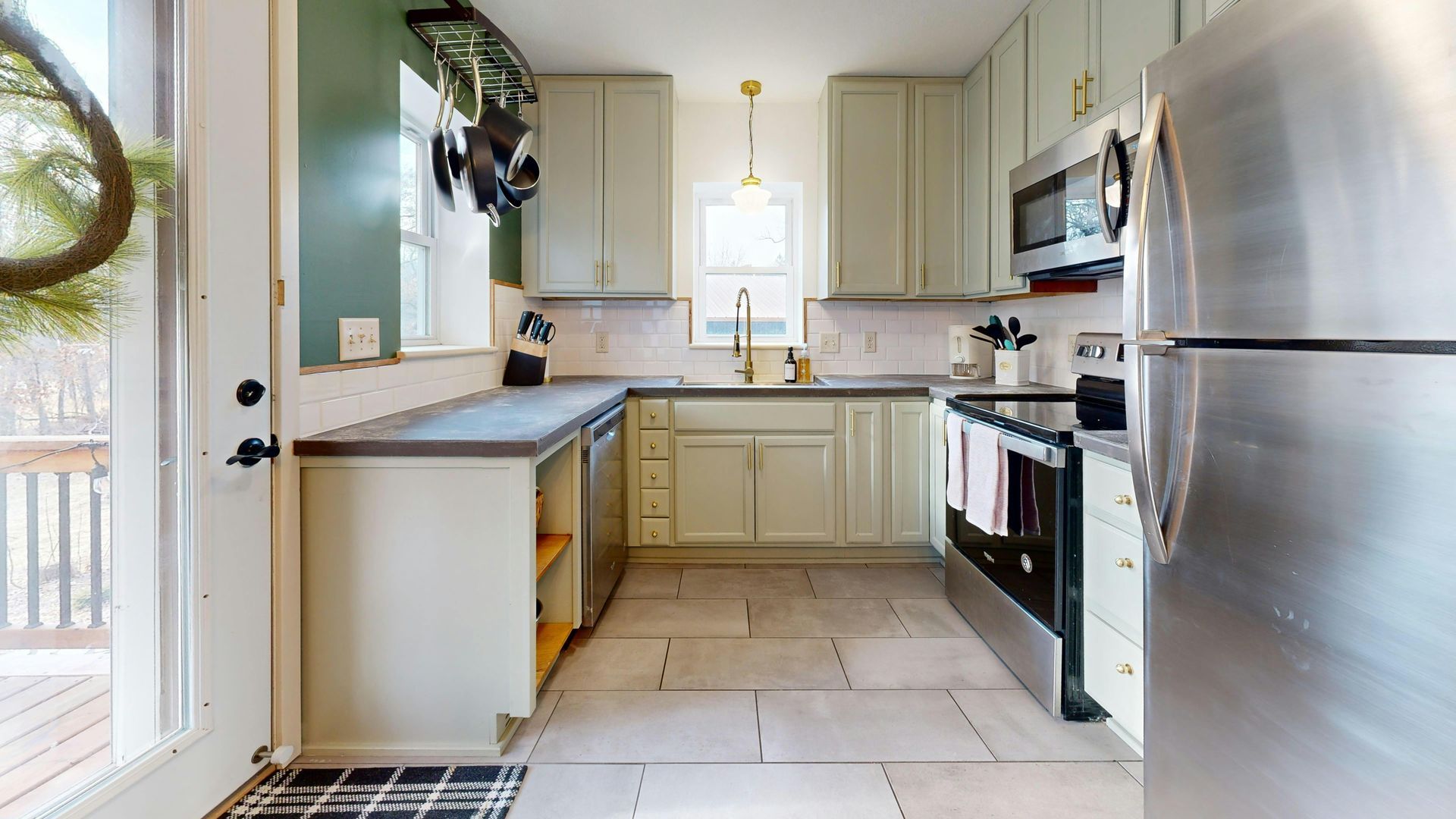
Cabinet painting is one of the most popular interior investments homeowners in Plano, Frisco, Richardson, Allen, McKinney, and across the greater Dallas-Fort Worth area make — and for good reason. At a fraction of the cost of full cabinet replacement, professionally painted cabinets can transform a dated kitchen into something that looks completely current. But it is also one of the more technically demanding painting projects in a residential home, and the failure rate on improperly executed cabinet paint jobs is high enough that many homeowners who have had cabinets painted before have had the experience of watching that investment begin to deteriorate within a year or two. Chipping at door edges and hardware locations. Yellowing of white or light-colored paint that shifts perceptibly toward ivory or cream within a few years. Peeling that starts at corner joints and progresses inward. These are the failure patterns that cabinet paint homeowners in DFW encounter most frequently, and each of them is telling a specific story about what went wrong at the preparation or product selection stage — not about the inherent limitations of cabinet painting as a concept. Painted cabinets done correctly in a DFW kitchen last seven to ten years before requiring refinishing. Painted cabinets done incorrectly can look compromised within six months. Understanding what each failure mode indicates, how the specific conditions of a Dallas-Fort Worth kitchen accelerate certain types of deterioration, and what the preparation and product decisions that prevent those failures actually look like is what gives homeowners the information they need to evaluate whether a cabinet painting proposal is genuinely going to hold up — or whether it's going to produce the same disappointing result they've already experienced. Why DFW Kitchens Are Harder on Cabinet Paint Than Most Before getting into the specific failure modes, it helps to understand what makes a North Texas kitchen a particularly demanding environment for cabinet coatings. This isn't a generalization — the specific climate conditions of the Dallas-Fort Worth area create thermal and humidity stress profiles that are genuinely more challenging for cabinet paint than what most of the national cabinet painting guidance assumes. North Texas kitchens experience wide indoor humidity swings driven by the region's dramatic seasonal weather cycles. During the heating months, interior humidity can drop to 20 to 30 percent as forced air heating systems run continuously in dry winter conditions. During the summer months — when outdoor humidity is elevated and kitchens add steam and cooking moisture on top of the ambient humidity — that same space may exceed 60 to 70 percent relative humidity during active cooking periods. Wood cabinet boxes and doors absorb and release moisture in response to these swings, expanding slightly in humid periods and contracting in dry ones. Paint films bonded to those cabinet surfaces must accommodate this dimensional movement or they crack, lift at edges, and eventually fail. DFW's intense UV exposure through kitchen windows adds another layer of stress specific to this market. South and west-facing kitchens in Plano and Frisco receive direct afternoon sun that creates surface temperatures on cabinet doors well above ambient room temperature, and sustained UV exposure drives the yellowing process in white alkyd and oil-based finishes at a rate that homeowners in less sun-intense markets never encounter to the same degree. Add to these environmental factors the specific chemical exposure of a functioning kitchen — cooking grease that aerosolizes and deposits on every surface within several feet of the cooktop, alkaline cleaning products used daily on cabinet surfaces, and the mechanical abrasion of handles being gripped and cabinet doors being opened and closed hundreds of times per week — and you have a surface environment that exposes every weakness in a paint system within a relatively short timeframe. Chipping: The Failure Mode That Starts at Hardware and Edges Chipping is the failure mode most immediately visible on painted cabinets, and it concentrates at specific locations for specific reasons. The areas that chip first are almost always the same: directly behind door and drawer hardware where fingers grip the surface with every use, at the edges of door and drawer faces where the paint wraps around to the side of the panel, and at the corners of frame-and-panel doors where two painted surfaces meet at a sharp angle. These locations share a common characteristic: they are the points of highest mechanical stress on the painted surface. Hardware locations receive concentrated finger pressure and occasional impact from rings, bracelets, and the hardware itself backing into the painted surface. Edge locations receive impact from adjacent cabinet doors and drawers closing against them. Corner locations on frame-and-panel doors concentrate paint film stress at the geometry where two planes meet. Chipping at these locations almost always traces back to one of two preparation failures, and frequently both simultaneously. The first is insufficient surface scuffing and deglossing before painting. Cabinet surfaces — whether they are previously painted, stained and varnished, or factory-finished — are typically very smooth and have low surface energy that makes it difficult for new paint to form a strong adhesive bond without mechanical preparation. Painting over a smooth, previously finished cabinet surface without thorough scuff sanding leaves the new paint with bond strength that seems adequate initially but fails under the repeated mechanical stress of normal kitchen use. The second preparation failure is inadequate priming — specifically, the use of standard interior latex primer rather than a high-adhesion bonding primer formulated for previously finished surfaces. Standard latex primers are designed for drywall and bare wood, where their penetration depth and adhesion chemistry perform as intended. On a previously finished cabinet surface, they sit on top of the existing finish rather than penetrating into it, creating a primer layer with bond strength to the underlying surface that is marginally better than the topcoat alone would have achieved. A dedicated bonding primer — products formulated with adhesion promoters specifically for use over glossy and previously finished substrates — creates a chemical and mechanical bond that dramatically outperforms standard primers under the mechanical stress kitchen hardware locations generate. Yellowing: The Chemistry Behind White Cabinets That Don't Stay White Yellowing of white painted cabinets is the failure mode that surprises homeowners most, because white paint going yellow seems like a product quality problem rather than an application or product selection problem. The mechanism behind it is specific and preventable, and understanding it explains why some white cabinet paint jobs stay crisp for years while others shift perceptibly within twelve to eighteen months. The primary cause of yellowing in kitchen cabinet finishes is the use of alkyd or oil-modified resin systems in environments with insufficient UV exposure. Alkyd resins — which are a component of many high-performance cabinet finishes because of the hard, smooth film they produce — undergo an oxidation reaction in low-light conditions that produces yellowing compounds in the film. This is sometimes called "ambering" or "yellowing in the dark," and it is why cabinets inside closed pantries or on the interior-facing sides of cabinet doors yellow faster than the exterior faces that receive ambient light. In DFW kitchens with significant UV exposure from south and west-facing windows, the UV actually slows the yellowing mechanism in alkyd systems — which is why cabinet doors that face windows often yellow less than those on shaded walls. But those same UV-exposed doors then face accelerated binder degradation from the UV intensity that DFW delivers, creating a different failure pathway on the sun-exposed surfaces. The product solution for white and light-colored cabinets in North Texas kitchens is a waterborne alkyd or acrylic urethane formulation rather than traditional oil-based or pure alkyd products. Waterborne alkyds — products like Benjamin Moore Advance and Sherwin-Williams Emerald Urethane Trim Enamel — cure to a very hard, smooth film similar to traditional alkyd but without the oil-based binder that drives the yellowing chemistry. They maintain white and light colors significantly better over time, particularly in the low-light interior cabinet environments where yellowing concentrates, and they are the professional standard for light-colored cabinet painting in markets like DFW where UV and heat exposure make the performance of every coating decision visible within a relatively short timeframe. Peeling: What Delamination Is Actually Telling You Peeling on painted cabinets — where the paint lifts away from the surface in sheets or patches, sometimes pulling primer with it — is the most severe failure mode and the one with the clearest diagnosis: the adhesion between the paint system and the substrate was never properly established. Peeling doesn't develop out of thin air years after a good adhesion foundation — it develops when the adhesion foundation was inadequate from the beginning and the stress of kitchen conditions over time has exploited that weakness to the point of visible failure. The most common adhesion failure scenario on repainted DFW cabinets involves painting over a previously painted or varnished surface without adequately removing the existing finish first. Many kitchen cabinet surfaces carry factory conversion varnish finishes — the catalyzed, two-component coatings that furniture and cabinet manufacturers apply at the factory because of their exceptional hardness and chemical resistance. These finishes are genuinely difficult to paint over without either removing them mechanically or chemically etching them before primer application, because their hardness and low surface energy resist adhesion from standard primer systems. Homeowners and painting contractors who sand lightly and prime without fully addressing a conversion varnish surface create an adhesion system where the primer is bonded to a hard, slick factory finish rather than to the wood substrate. That factory finish, under the thermal and chemical stress of a DFW kitchen, eventually releases from the wood below the paint system — and when it does, it takes the entire paint system above it along with it in the delamination pattern that homeowners recognize as peeling. The correct solution for conversion varnish cabinets is either mechanical removal with sanding to bare wood or chemical etching with a product specifically formulated to prepare conversion varnish surfaces for repainting — neither of which is a shortcut-friendly process, but both of which produce adhesion foundations that hold. The Prep Protocol That Determines Whether Your Cabinet Paint Job Lasts Given the specific failure modes and their causes, the preparation protocol for a DFW kitchen cabinet paint job that will genuinely hold for seven to ten years is more involved than a light sanding and a coat of primer. It begins with the cleaning step that most DIY and budget cabinet painting projects skip entirely: a thorough degreasing of every cabinet surface with TSP or a dedicated degreaser that removes the cooking grease film that has accumulated on every surface within reach of the cooktop, regardless of whether it's visible. This degreasing step removes the contamination layer that prevents primer adhesion at a molecular level and that produces the localized adhesion failures — the flat, dull patches and the early chipping at hardware zones — that show up within the first year on inadequately prepared cabinets. After degreasing, thorough mechanical scuffing with 150 to 180 grit paper creates the surface profile that allows bonding primer to grip. Hardware removal before sanding, rather than masking around it, exposes every surface that will receive paint rather than creating a shielded zone at the highest-stress location on the door. Filling and sanding any surface damage — edge chips, corner wear, hinge screw holes that have enlarged — produces the uniformly smooth substrate that cabinet paint requires to level and cure into the smooth, hard film that kitchen use demands. With a degreased, mechanically prepared surface, a bonding primer applied in a thin, even coat provides the adhesion foundation that every subsequent coat builds on. Two to three coats of waterborne alkyd trim enamel, applied with a fine-finish spray gun or a high-quality foam roller to achieve the smooth, hard film that brush application cannot produce on horizontal cabinet faces, completes a system that is genuinely capable of holding up to the thermal, chemical, and mechanical demands of a DFW kitchen. Let Hutch'N'Son Deliver a Cabinet Finish That Holds Up in a Texas Kitchen Cabinet painting done at the preparation and product standard that DFW's specific kitchen conditions demand is genuinely transformative and genuinely durable — but it requires every step of the preparation process to be executed without shortcuts, and product selection that responds to the specific failure mechanisms that North Texas heat, humidity swings, and UV intensity create. At Hutch'N'Son Painting, we've spent over forty years working in kitchens throughout Plano, Frisco, Richardson, Allen, McKinney, and the greater DFW area, and we understand exactly what cabinet paint jobs look like at year three when the prep was done right and when it wasn't. If you're ready to have your cabinets painted with the preparation discipline and product knowledge that makes this investment last, contact us today for your free estimate — and let's create a kitchen finish that stands up to everything our climate delivers.
Show More