Why Exterior Prep Takes as Long as It Does — and What Happens When It's Rushed in North Texas

There is a pattern that repeats itself across Plano, Frisco, Richardson, Allen, McKinney, and every other established neighborhood in the Dallas-Fort Worth metroplex with enough regularity that experienced exterior painters can almost predict it from a street-level assessment. A home gets painted — often by the lowest bidder on a competitive job — and the result looks excellent for the first season. The color is right, the coverage looks complete, and the homeowner feels good about the decision. By the second spring, peeling begins at the window frames. By the third year, bubbling has appeared on the south-facing walls, the caulk at the door casings is cracking, and sections of siding that were never a problem before the paint job are showing moisture staining that wasn't there two years ago.
The paint didn't fail. The preparation failed. And the paint is simply making that failure visible. This outcome is so common in the DFW market because North Texas delivers one of the most demanding exterior environments for paint coatings in the country, and that demanding environment has zero tolerance for preparation shortcuts that milder climates sometimes absorb without immediate consequence. Surface temperatures exceeding 150 degrees on south and west-facing walls in summer, freeze-thaw cycling through a North Texas winter that is less severe than Wisconsin's but still consequential for any moisture that has infiltrated a compromised joint, spring hail that impacts paint films at velocities most manufacturers don't test against, and the expansive clay soils that shift foundations and stress every caulk joint in a structure — every one of these forces exploits any weak point in the preparation system with a speed and thoroughness that makes the cost of skipped prep immediately quantifiable in years of paint life lost.
Understanding what exterior preparation actually involves, how long each phase takes when done correctly, and what the specific preparation failures look like in the DFW environment is what allows homeowners to evaluate competing proposals intelligently rather than defaulting to price as the primary differentiator.
What Exterior Preparation Actually Consists Of
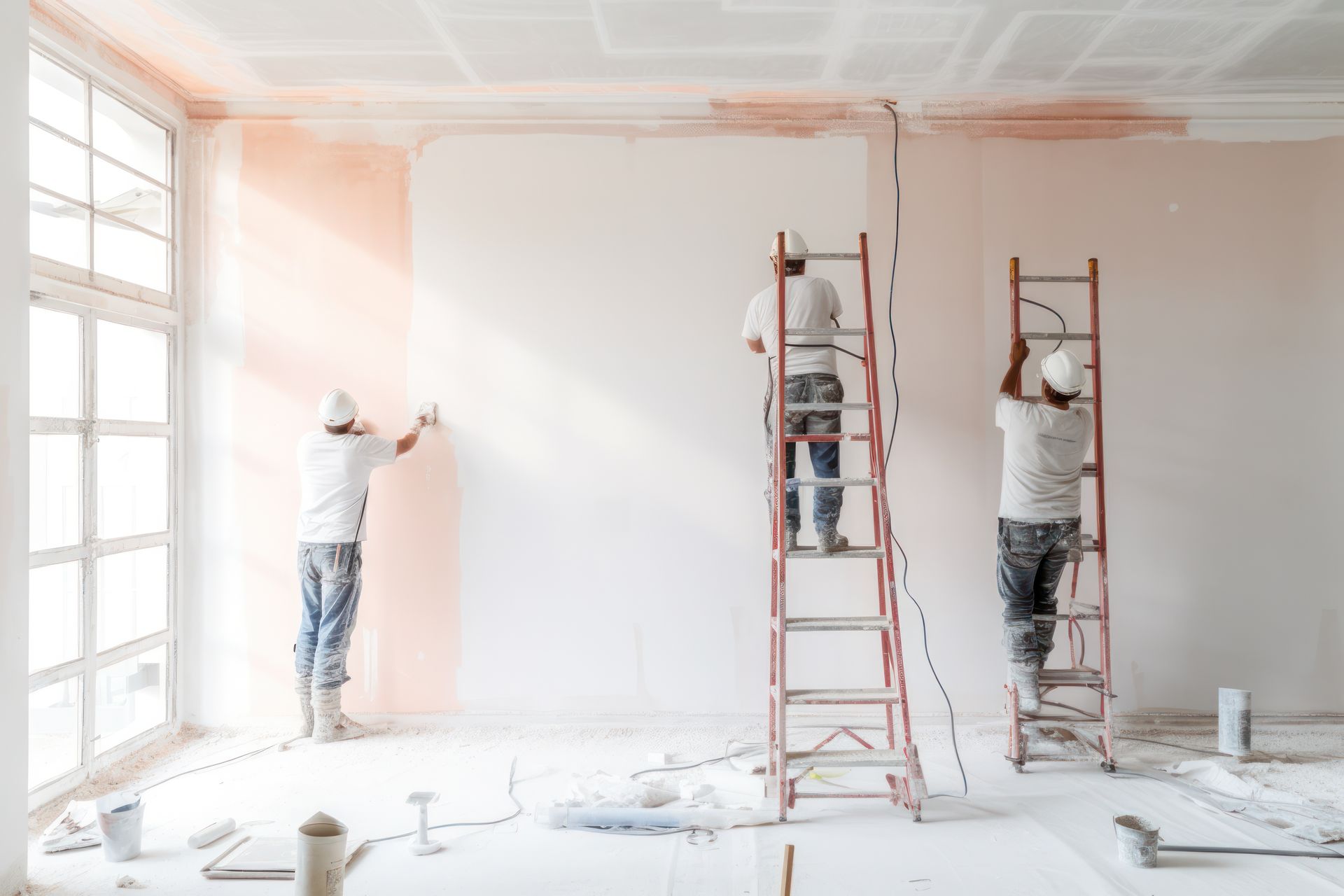
The term "prep work" covers a range of activities that vary enormously in scope and thoroughness between contractors, and the difference between a thorough preparation and a minimal one isn't always visible until the paint has been on the wall for two seasons. Breaking down what complete exterior preparation actually involves — and how long each component takes on a typical DFW home — makes the time investment make sense in concrete terms.
Pressure washing is the most visible preparation step and the one most homeowners are aware of, but it is the beginning of the preparation process rather than the whole of it. Proper pressure washing of a typical 2,000 to 2,500 square foot DFW home takes two to four hours of actual washing time, followed by a drying period that in North Texas conditions during spring and fall should be at minimum 24 hours and ideally 48 hours before any coating is applied. Rushing the dry period — beginning prep work the morning after afternoon washing because the surface looks dry — is one of the most common preparation shortcuts in the market, and it is one that doesn't become visible until months later when moisture trapped between the wet substrate and the new coating migrates outward and lifts the paint film from below.
After washing and adequate drying, the scraping phase addresses all loose, failing, and compromised paint on the existing surface. On a DFW home that has been previously painted and is being repainted rather than receiving a first application, this phase is where the real time investment separates thorough preparation from cursory preparation. A contractor committed to scraping every area of loose paint back to a solid, adherent edge — not just the sections that are obviously peeling, but every section that fails the adhesion test of a putty knife drawn firmly across the surface — will spend significantly longer on scraping than a contractor who addresses only the visibly deteriorated areas and calls the surface ready. This distinction is invisible from a proposal document that simply says "scrape and prepare." It is very visible two years later when the sections that weren't adequately scraped begin lifting.
The Caulk Phase: The Preparation Step With the Highest Consequence-to-Time Ratio
Caulking is the preparation phase that has the greatest single impact on how long an exterior paint job performs in North Texas conditions, and it is also the phase most frequently executed inadequately — not because it is technically difficult, but because doing it correctly is time-consuming and the shortcuts are invisible at inspection.
Complete caulking preparation on a DFW home involves removing all existing caulk from every joint on the exterior — every window and door perimeter, every penetration through the siding, every transition between dissimilar materials — before any new caulk is applied. This removal-first protocol is what distinguishes professional exterior preparation from superficial preparation, and it is the step most frequently skipped. Applying new caulk over existing caulk that has hardened, cracked, or partially separated from the substrate creates a layered system where the new bead can only adhere as well as the old bead beneath it adheres to the substrate — which is, by definition, inadequately. The new caulk looks complete at inspection and fails within one to two DFW winter and summer cycles because it is bonded to a failing layer rather than to the actual substrate.
Removing all existing caulk from a 2,000 to 2,500 square foot home with standard window and door counts takes three to five hours of dedicated work. Cleaning the joint faces after removal, allowing them to dry, and applying new siliconized acrylic caulk with proper tooling and a cure period before painting adds another four to six hours across the caulking phase. For a complete exterior preparation project, the caulk phase alone represents a full day of work — time that a contractor proposing a two-day exterior job on a standard DFW home almost certainly hasn't allocated for if the total project timeline has to accommodate that scope.
Priming: The Phase That Most Exterior Proposals Treat as Optional
Primer specification on an exterior painting project is where the difference between a professional preparation standard and a budget approach becomes most consequential for long-term performance, and it is the phase where the most technically significant shortcuts are taken.
Not every surface on a DFW exterior requires a full prime coat before topcoat application. Sound, previously painted surfaces being coated with a compatible product at reasonable color similarity can accept topcoat directly over properly prepared existing paint. But specific conditions require primer, and identifying and addressing those conditions in the preparation phase rather than painting over them is what prevents the failures that appear within the first two years on a new paint job.
Bare wood exposed by thorough scraping requires spot priming before topcoat to seal the porous substrate against moisture infiltration and to provide the film build that topcoat alone cannot deliver over raw wood in a single application. Patched areas where joint compound or filler has been used to address surface damage require priming before topcoat because joint compound absorbs paint at a different rate than the surrounding surface, and unprimed patches produce the flat, dull spots — called flashing — that appear as visible patches under raking light even when the topcoat color is uniformly correct. Water stained areas on siding or trim require stain-blocking primer before topcoat, because standard topcoat over an unblocked water stain produces a result that looks clean on application and reveals the stain through the fresh paint within weeks as the water-soluble compounds migrate upward through the wet film.
In North Texas, where hail damage creates small but numerous impact marks on painted siding surfaces, and where foundation movement creates hairline cracks at corners and around openings on almost every home in the Blackland Prairie clay zone, the priming phase on a DFW home requires more surface-specific attention than a standard exterior project elsewhere demands. Mapping every hail impact, every crack, and every repaired area and ensuring each receives the correct primer treatment adds time to the preparation phase — time that the homeowner who compares a thorough proposal to a budget proposal will see as a cost difference rather than understanding it as a performance difference that shows up in years three and four rather than on day one.
The Dry Time Discipline That North Texas Makes Particularly Consequential
Across every phase of exterior preparation, the dry time discipline — the commitment to allowing each material adequate time to cure before the next phase begins — is the variable that separates a preparation sequence that performs as designed from one that fails at the timing weak points despite using the right materials.
This dry time discipline is particularly consequential in DFW because North Texas weather creates conditions that both compress and extend dry times in ways that require active management rather than passive adherence to product-label specifications. A product label dry time is calibrated for moderate temperature and humidity conditions. In the DFW area during spring painting season — the peak exterior painting window — temperatures can swing from cool, damp mornings to hot, dry afternoons within a single day, and the dry time behavior of caulk, primer, and topcoat changes meaningfully across that swing. Caulk applied at 50 degrees in the morning may not reach adequate cure for painting by 2 pm even if the label suggests a four-hour window, while caulk applied at 80 degrees on a dry afternoon in the same week may be ready in two hours.
Professional exterior painters in the DFW market who have spent years managing this variability develop judgment about when materials are actually ready for the next phase rather than when the clock says they should be, and that judgment translates into preparation sequences that hold up versus ones that look complete but have embedded timing failures that surface over the following seasons.
What a Proper Exterior Prep Timeline Looks Like on a DFW Home
For a typical 2,000 to 2,500 square foot single-story home in Plano, Frisco, Richardson, Allen, or McKinney, the preparation phase of a professionally executed exterior painting project takes two to three full working days before a topcoat is applied to any surface. This timeline accounts for pressure washing and dry time, complete scraping, caulk removal and replacement with adequate cure time, spot priming and stain blocking at every location that requires it, and a final surface inspection before the first topcoat is committed.
A proposal for the same home that anticipates total project completion in two days — which is the timeline many budget exterior proposals in the DFW market are built around — mathematically cannot have allocated the preparation time that the work described above requires. The time has to come from somewhere, and it comes from the preparation phases that don't show up in finished photographs and aren't visible at project completion. They show up at year two and year three, when the homeowner is back to square one on a paint investment that should have lasted eight.
Hutch'N'Son Doesn't Cut Corners on Prep
35+ years of painting homes throughout Plano, Frisco, Richardson, Allen, McKinney, and the greater Dallas-Fort Worth area has given the Hutch'N'Son team a specific and detailed knowledge of what exterior preparation shortcuts look like at year two and year three — because we're often the crew called to repaint the homes where they happened. Our exterior project timelines are built around what the preparation actually requires in North Texas conditions, not around a price point that makes the proposal win the comparison. If you're planning an exterior painting project and want a straight, honest assessment of what your home's exterior actually needs — including what the preparation phase involves and why it takes as long as it does — contact our team today to schedule your free estimate. Let's talk about your home specifically, and let's build a preparation foundation that makes the paint job you invest in this season last the way it's supposed to.